History of Dünner SA
Founded in 1935 in the heart of bar turning, in the Jura Arc
1935
Walter Dünner SA, named after its founder, began its activities in 1935 with its first employee, Jean Dünner—Walter’s father—an independent watchmaker seeking employment.
The company’s initial production focused on turning cams for automatic lathes, which were exported in large quantities to the United States. At the request of American customers, the company shifted towards producing collets and tungsten carbide guide bushings, then known as “Widia bushings.” Manufacturing this type of product led the company to develop its own grinding wheels, design lapping compounds, and crush and sieve diamonds to achieve the required grain size.
1948
Albert, Walter’s son, joined the company and demonstrated innovation by developing guide bushings with angled slots to improve lubrication and reduce material seizure.
This innovation increased production and boosted product sales, leading the company to expand its facilities. The additional space made it possible to acquire more advanced machines, ensuring improved precision.
1971
A major German machine manufacturer challenged all producers in the sector to produce guide bushings with unprecedented precision: a maximum runout of 5 microns over a length of 12 millimeters in front of the bushing.
Walter Dünner SA, already recognized for the precision of its products, successfully met this challenge and obtained exclusivity for producing ultra-precision bushings delivered with the manufacturer’s machines.
1981
In 1981, Daniel, Albert’s son, joined the company.
1985
In 1985, while the effects of the watchmaking crisis were still being felt, the company diversified into the production of an adjustable clarinet mouthpiece. This significant investment followed several orders from Buffet Crampon in Paris. Unfortunately, this venture ended after the acquisition of Buffet Crampon by the British group Boosey & Hawkes.
1991
In 1991, Surf technology was introduced. This cermet guide bushing proved particularly suitable for machining medical stainless steels and, when combined with chlorinated oil, enabled high performance. As a result, major implant manufacturers expanded their machine fleets. To keep pace, the company introduced a threading insert profiling service in 1992, expanding its offering for the medical sector.
1993
In 1993, Albert handed over management of the company to his son Daniel, while remaining active in customer service. Pascale Dünner, Daniel’s wife, contributed to the company’s development and supervised administrative operations.
That same year, the “Certech” ceramic bushing was developed, allowing the machining of small-diameter bars and solving seizure issues following the ban on chlorinated oils. Although well received, it proved too brittle for diameters above 3 mm.
1995
In 1995, a specific adaptation was requested to use a double-cone guide bushing and convert an Index G300 lathe into a sliding-head machine. This development is still used today.
1999
In 1999, the machine park was doubled to avoid operational disruptions in case of technical failure.
2000
In 2000, two Hänel storage systems were installed to improve part organization.
2001
In 2001, a new ceramic offering improved resistance in larger diameters was developed. Today, these bushings—named NewSurf®—are flagship products.
2002
In 2002, Walter Dünner SA filed a Swiss patent for a large-opening collet, followed by international patents in 2006 (USA, Europe, Japan). Despite numerous attempts at imitation, this product remains a benchmark.
2005
In 2005, the fourth generation entered the company with Sébastien, Daniel’s son, focusing on DunnAir systems, IT, and marketing.
2006
In 2006, the LongStar collet was developed, offering stronger clamping for irregular materials.
2007
In 2007, the first DunnAir system was successfully introduced to the market for the Tornos Deco 20 machine. That same year, an experimental range of flexible guide bushings was developed, the DUNNER brand was modernized, and Michael, Daniel’s son (4th generation), became a shareholder and joined the board of directors.
2008
In 2008, Yoni, Daniel’s son (4th generation), joined the company and gradually took over production management. That year, a true flexible guide bushing was developed, offering a working range of 0.50 mm compared to a maximum of 0.03 mm for patented standard bushings.
2011
In 2011, faced with the reluctance of machine manufacturers to provide technical data required for DunnAir system integration, the company acquired a Faro-type laser scanning arm, allowing measurements to be taken directly inside machines.
2012
In 2012, Catia Dünner, Sébastien’s wife, joined the company.
2016
In 2016, a new production, order, and inventory management system was implemented under the direction of Sébastien, project manager. This implementation required several months. At the end of the year, Sébastien and Yoni joined the board of directors and became shareholders. On this occasion, the company name Walter Dünner SA was changed to DUNNER SA.
2017
In 2017, the company obtained exclusive distribution rights for Masa Tool Inc. products, including the Microconic™ system for Europe, excluding Germany and the United Kingdom.
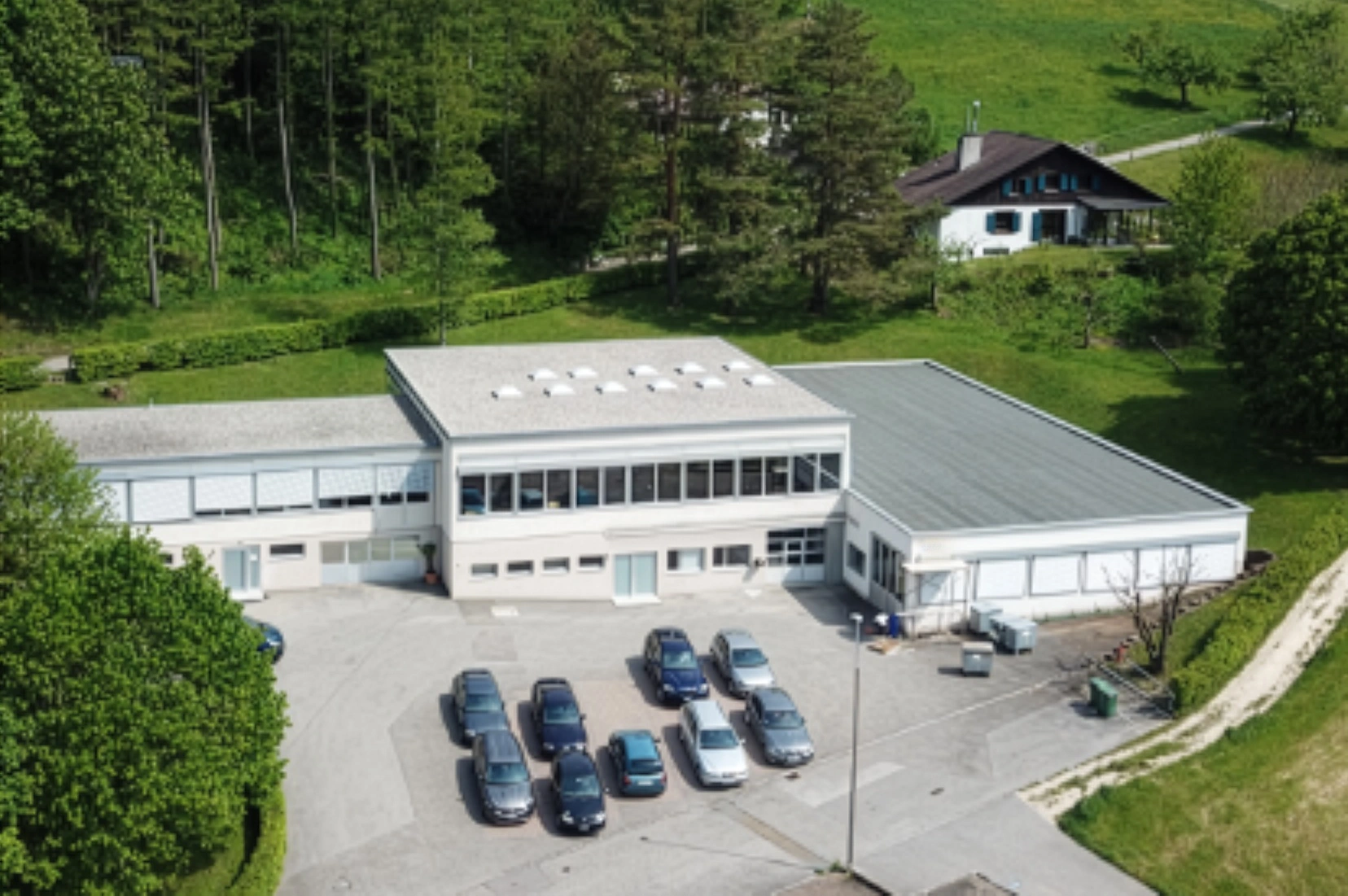
Between 2017 and 2018, DUNNER SA relocated from Rue de Soleure 25 to Chemin des Sources 7. Production was reorganized according to LEAN principles to better manage customer orders. The storage system was completely replaced with automated storage systems, enabling faster order preparation and significant gains in space and flexibility.
2018
In 2018, the first 38 mm capacity machine, a Citizen L238, was successfully equipped with a DunnAir system.
2019
In 2019, investments in the machine park enabled the modernization of certain workstations and expanded capabilities for special machining operations, particularly for clamping collets.
2020
In 2020, to meet the needs of customers equipped with high-pressure pumps, a protective cover system was introduced for DunnAir systems. It solves issues of premature rubber wear and improves the cleanliness of the guide bushing housing.
2021
In 2021, despite the health crisis, over five years of research led to the development of a DunnAir system compatible with small-capacity machines. It was first made available for CITIZEN L12 machines.